The difference between vitamins and minerals lies in their chemical nature, sources, and roles in the body. Vitamins are organic compounds from plants and animals, while minerals are inorganic elements from soil and water. This yourfootpalace.com article will help you understand these distinctions and how they impact your health.

Key Takeaways
- Vitamins and minerals are essential micronutrients that support various bodily functions but do not provide energy directly.
- Vitamins are organic compounds categorized into water-soluble and fat-soluble, while minerals are inorganic elements crucial for health and functioning.
- A balanced diet rich in fruits, vegetables, lean meats, and dairy is vital for obtaining necessary vitamins and minerals while avoiding over-supplementation risks.
Understanding Vitamins and Minerals
Vitamins and minerals are classified as micronutrients, which, despite being required in smaller quantities compared to macronutrients like carbohydrates, proteins, and fats, are indispensable for the body’s smooth operation. These essential nutrients support various metabolic processes, helping to extract and utilize energy from the foods we consume. Unlike macronutrients, vitamins and minerals do not provide energy directly but are crucial in maintaining health and balance.
The body requires 13 essential vitamins to function properly, sourced primarily from plants and animals. On the other hand, minerals are inorganic elements obtained from the earth and water, absorbed by plants, and then consumed by animals and humans. This difference in sourcing is one of the many fascinating contrasts between these two types of nutrients.
Vitamins: The Organic Compounds

Vitamins are organic compounds that our bodies derive from the foods we eat. These nutrients are essential for numerous bodily functions and are primarily sourced from vegetables, meats, and dairy products.
The diverse chemical structure of these organic compounds allows them to participate in a wide range of physiological processes, supporting everything from immunity to energy production.
Classification of Vitamins
Vitamins are classified into two main categories: water-soluble and fat-soluble. Water-soluble vitamins, which include vitamin C and B vitamins, dissolve in water and are not stored in the body. This means they need to be consumed more regularly to maintain adequate levels. On the other hand, the four fat-soluble vitamins, such as vitamins A, D, E, and K, do not dissolve in water and are stored in the liver, muscles, and fat tissues. Healthy fats from sources like avocados and nuts are crucial for the absorption of these fat-soluble vitamins.
The distinction between water-soluble and fat-soluble vitamins is important because it affects how these vitamins are absorbed, stored, and utilized by the body. This classification also influences dietary recommendations and the potential risks of vitamin deficiencies or toxicities.
Functions of Vitamins
Vitamins play pivotal roles in maintaining various physiological processes. They are essential for immune support, wound healing, hormone regulation, and maintaining healthy skin and nerves. For instance, vitamin C is well-known for its role in supporting the immune system and promoting faster wound healing, while B vitamins are crucial for energy production and brain function.
The body can suffer from various deficiencies that impair these critical functions without adequate vitamin intake. This underscores the importance of consuming a balanced, vitamin-rich diet and considering dietary supplements when necessary to ensure that all specific nutrient needs are met.
Minerals: The Inorganic Elements
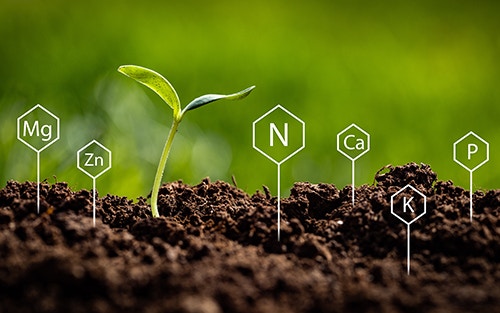
Unlike vitamins, minerals are inorganic elements sourced from nonliving materials like the earth and water. These essential nutrients and mineral supplements are absorbed by plants from the soil and water and then consumed by animals and humans.
The body uses minerals as structural components – for example, calcium in bones and iron in red blood cells – highlighting their critical roles in maintaining overall health.
Types of Minerals
Minerals can be categorized into two primary groups. These groups are major minerals and trace minerals. Major minerals, including calcium, phosphorus, potassium, magnesium, sodium, chloride, and sulfur, are required by the body in larger quantities. These minerals are essential for various bodily functions, such as maintaining fluid balance and supporting muscle and nerve function.
Trace minerals, on the other hand, are needed in smaller amounts but are equally important for health. These include:
- iron
- copper
- zinc
- manganese
- iodine
- selenium
- fluoride
Despite their required smaller quantities, trace minerals play crucial roles in processes like oxygen transport, enzyme activation, and thyroid function.
Functions of Minerals
Minerals are vital for a wide range of bodily functions. They help maintain strong bones and teeth, support fluid balance, and aid in muscle and nerve functions. For example, calcium is essential for muscle contraction, blood vessel function, and nerve signal transmission. Similarly, potassium is crucial for maintaining fluid balance, regulating blood pressure, and supporting muscle and nerve functions.
Magnesium, another important mineral, supports various biochemical reactions, including those related to muscle and nerve function and blood sugar regulation. These functions underscore the importance of ensuring adequate mineral intake through a balanced diet.
Key Differences Between Vitamins and Minerals
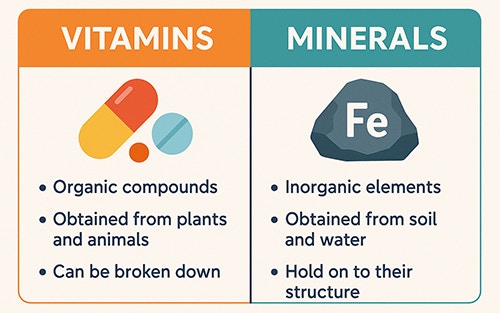
One of the key differences between vitamins and minerals lies in their chemical nature: vitamins are organic compounds containing carbon, whereas minerals are inorganic elements. This distinction affects how these nutrients interact with the body and their sources. Vitamins are derived from plants and animals, while minerals come from soil and water, making their way into our diet through the consumption of plants and animal products.
Another significant difference is in their roles: vitamins assist in energy release from food and support skin and nerve health, while minerals are crucial for activating enzymes and hormones essential for various bodily processes. Additionally, electrolytes such as sodium and potassium, which are types of minerals, help maintain acid-base balance and manage body fluids.
Common Vitamins and Their Benefits
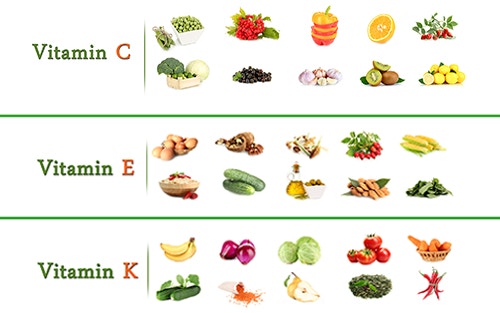
Common vitamins like vitamin C, vitamin D, folic acid, and vitamin E offer numerous health benefits. Vitamin C, for instance, is vital for collagen synthesis, which is important for connective tissue. It also acts as an antioxidant, protecting cells from damage.
Vitamin D is essential for bone health, aiding in the absorption of calcium. Folic acid is crucial for producing red blood cells and preventing birth defects. Vitamin E, another antioxidant, helps protect cells from oxidative stress and supports immune function.
Consuming fortified cereals can help ensure adequate intake of these essential vitamins.
Essential Minerals and Their Roles
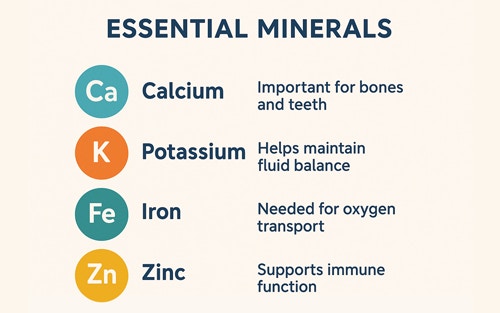
Essential minerals such as:
- Calcium, which is paramount for maintaining strong bones and overall health, plays a vital role in bone structure and function
- Iron, which is essential for the production of hemoglobin and overall energy levels
- Magnesium, which supports muscle and nerve function as well as energy production
- Potassium, which helps regulate fluid balance and muscle contractions
play critical roles in maintaining health and development.
Iron is essential for the production of red blood cells and for transporting oxygen throughout the body. Magnesium supports various biochemical reactions, including those necessary for muscle and nerve function, while potassium helps regulate fluid balance and maintain proper muscle function.
The Importance of a Balanced Diet

A balanced diet is crucial for obtaining the necessary vitamins and minerals.
A diverse intake of:
- fruits
- vegetables
- whole grains
- lean meats
- low-fat dairy
This variety of fruits, vegetables, whole grains, lean meats, and low-fat dairy provides the essential nutrients in the right proportions, ensuring the body gets what it needs to function properly and stay healthy.
Maintaining a balanced, healthy diet is the best way to ensure the body absorbs essential vitamins and minerals. Incorporating different food groups helps cover nutrient gaps and supports overall health.
Potential Risks of Over-Supplementation
While vitamins and minerals are essential, consuming them excessively can lead to health issues. Over-supplementation, especially of fat-soluble vitamins, can cause toxicity, leading to symptoms like nausea and vomiting. Minerals can also accumulate in the body, posing a risk of toxicity, particularly with excessive supplementation.
Excessive intake of dietary supplements can result in health problems such as high blood pressure and nerve damage. Balancing nutrient intake is crucial to avoid potential risks and maintain optimal health.
How to Ensure Adequate Nutrient Intake
To ensure adequate nutrient intake, focus on obtaining vitamins and minerals primarily from whole, unprocessed foods. Incorporating a variety of fruits, vegetables, whole grains, lean meats, and low-fat dairy is essential for meeting nutrient needs.
Consider dietary supplements if there are specific nutrient gaps or deficiencies, but always aim for a balanced diet to cover most of your nutritional needs. Following the recommended dietary allowance and guidelines from national institutes can help maintain strong bones and overall health.

Vitamin and Mineral Summary
In conclusion, understanding the essential difference between vitamins and minerals is key to maintaining a healthy and balanced diet. Though required in smaller quantities, these micronutrients play critical roles in supporting various bodily functions. By focusing on a diverse intake of foods and considering supplementation when necessary, you can ensure your body gets all the nutrients it needs for optimal health.
Vitamin and Mineral Frequently Asked Questions
What is the difference between vitamins and minerals?
Vitamins are organic compounds obtained from plant and animal sources, whereas minerals are inorganic elements found in the earth and water. This fundamental difference highlights their distinct roles in nutrition and health.
Why are vitamins and minerals important?
Vitamins and minerals are essential as they support critical bodily functions, including immune response, wound healing, and maintaining strong bones. Ensuring adequate intake contributes significantly to overall health and well-being.
Can I get all the nutrients I need from a balanced diet?
Absolutely, a well-balanced diet that includes a variety of foods can supply all the necessary vitamins and minerals for optimal health. Prioritizing diversity in your food choices is key to meeting your nutritional needs.
What are the risks of over-supplementation?
Over-supplementation poses significant risks, including toxicity and health complications such as high blood pressure and nerve damage. It is crucial to adhere to recommended dosages to maintain your health.
How can I ensure I get enough vitamins and minerals?
To ensure you get enough vitamins and minerals, focus on a diverse diet that includes fruits, vegetables, whole grains, lean meats, and low-fat dairy. If necessary, consider dietary supplements to fill any gaps.
(706) 521-5290
To view the original version on Foot Palace, visit: https://yourfootpalace.com/difference-between-vitamins-and-minerals/

